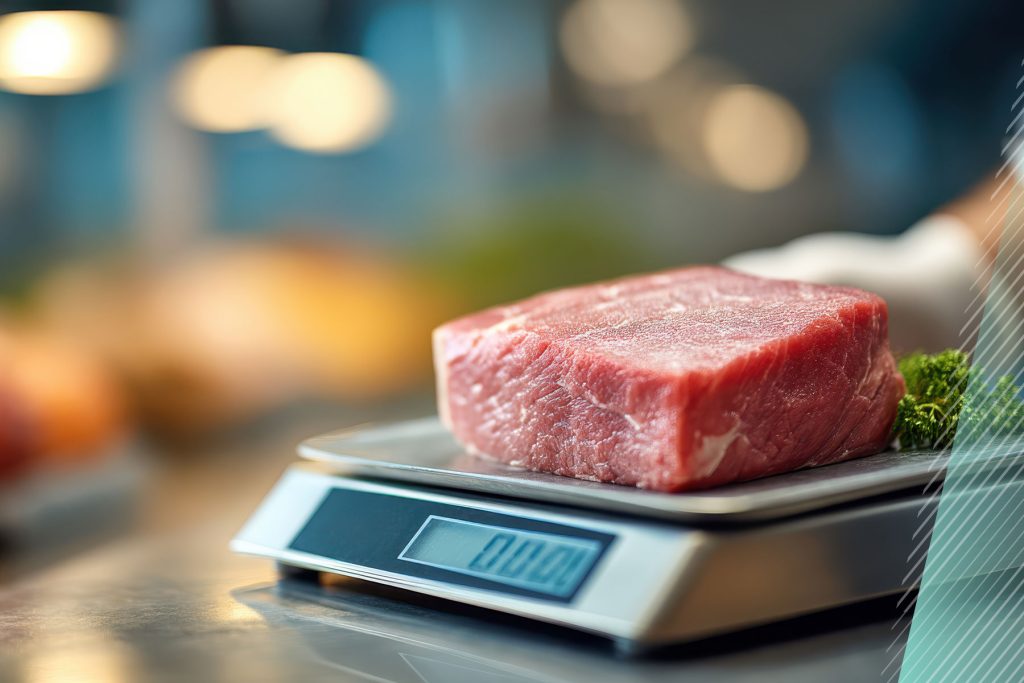
If you run a meat market, bakery, deli, or produce stand, you know how important reliable retail weighing scales are. A certified legal-for-trade scale keeps you compliant with legal standards, prevents costly errors, and ensures customers are charged fairly. Best of all, using an accredited scale builds trust – when people know they’re getting what they pay for, they’re more likely to return.
Some small businesses skip certified legal-for-trade scales due to costs or a lack of awareness, but that choice can backfire. Inaccurate weights risk fines, customer disputes, and damaged trust. Plus, uncertified scales often don’t play well with modern POS systems, creating extra work and a higher chance of errors.
In this article, we’ll look at what business owners should know about retail weighing scales, including how to choose a legal-for-trade scale and how (and how often) to calibrate them to maintain optimum accuracy. We’ll also look at labeling, frequency of inspections, and how to choose a scale that’s right for you.
What is a legal-for-trade scale?
Legal-for-trade scales are a must if you sell by weight. They keep every measurement accurate, so you don’t undercharge (or overcharge) your customers, and they help you stay on the right side of the law, avoiding fines and disputes.
Unlike a standard scale, this type of scale has been tested and certified by inspectors to be accurate and sealed (a tamper-evident seal or mark affixed to the scale after approval), so it cannot be tampered with. Certification ensures every sale is fair for you and your customers.
The bottom line is that your scale must be calibrated and certified by a licensed third-party service provider or weights and measures inspectors. This ensures compliance with regulatory standards, provides official documentation and certification required by regulators, protects against fines or disputes, and guarantees your scale is “legal for trade.”
Six things to consider when choosing a legal-for-trade scale
Looking for a legal-for-trade scale for your business? Here are six key considerations you should think about when choosing a legal-for-trade scale:
-
Certification:
Make sure the scale is NTEP-certified (in the U.S.) or approved by your local weights and measures authority. Without this, you can’t legally sell by weight.
-
Capacity and accuracy:
Choose a scale that matches your typical products. A deli might need precision for ounces, while a produce stand needs a higher weight capacity.
-
POS integration:
Choose a scale that connects easily with your point-of-sale system for faster checkouts and fewer errors.
-
Ease of use, durability, and maintenance:
Look for clear displays, simple calibration, and a durable design that can handle daily wear in a busy shop.
-
Support and service:
Choose a supplier or vendor who offers set up help, regular maintenance, certification assistance, and ongoing service for inspections, repairs, and re-sealing.
-
User-friendly interface:
Quick tare (subtracts the weight of a container so the customer only pays for the product inside), label printing, and easy price-per-pound entry keep checkout lines moving.
A retail scale guide is a helpful resource for choosing, using, and maintaining legal-for-trade scales. It covers topics like requirements, calibration, and POS integration. You can find retail scale guides on the websites of scale manufacturers, POS providers, industry associations, or state weights and measures agencies.
The everyday business value of POS-integrated retail weighing scales
A built-in POS-integrated scale simplifies selling by weight. It calculates prices instantly, updates inventory automatically, and ensures accurate, compliant measurements. You’ll save time, reduce errors, and stay on top of sales, all while keeping daily operations smoother, faster, and less stressful.
“Built-in” can mean the scale is physically part of the POS station, either embedded in or beside the counter, or is a separate device connected by software or wiring. Either way, a POS with scale ensures accurate pricing.
Why regular scale calibration is essential
If you sell by weight, keeping your scales accurate is non-negotiable. A scale that’s even slightly off can cost you, whether it’s lost revenue from undercharging or upset customers (and possible fines) from overcharging. Regular calibration keeps your scales compliant, your margins protected, and your customers’ trust intact.
So, how often should you calibrate? Here’s a quick checklist.
-
Daily/weekly quick checks:
Many retailers who sell items by weight do regular in-house accuracy checks with certified test weights to catch drift early. It’s not an official calibration, just good practice.
-
Once a year (minimum):
Most U.S. states require professional calibration and certification at least once per year by a licensed scale service company or local weights and measures department.
-
High-usage environments:
If your scale gets heavy daily use, service providers often recommend calibration every 3 to 6 months. Constant use and environmental factors, like temperature changes, vibrations, and humidity, can cause drift.
-
Whenever the scale is moved or damaged:
Moving a scale even a short distance can affect accuracy. Whenever a scale is relocated, dropped, or shows inconsistent readings, you should recalibrate it immediately.
Inspectors typically visit once a year to test scale accuracy and check that labels and displays meet legal standards. Heavily used or previously flagged scales may be checked more often, and surprise inspections can happen if there have been customer complaints, previous violations, or signs of equipment tampering.
What your scale labels should tell customers (and why it matters)
If your scale prints labels, they need to show the net weight, price per unit, total price, and your store name. Use legal units like pounds or kilograms, and make sure the total price is easy to read. Most U.S. areas also require a customer-facing display so buyers can clearly see the weight and price as you ring them up.
Businesses that sell by weight can face fines from state or local weights and measures authorities, failed inspections, or even legal action if their labels don’t meet requirements. Inaccurate or unclear labels can also damage customer trust and hurt a store’s reputation with both buyers and regulators.
One comprehensive setup for weighing, pricing, and payment – powered by goEBT
goEBT offers POS-integrated weight systems designed for retailers like delis, meat markets, bakeries, and produce stands. Through trusted third-party partnerships, we deliver all-in-one solutions that include POS-integrated scale support. These systems simplify weighing, pricing, and labeling, making it easier to manage products sold by weight.
Our partnered POS solutions can further streamline your operations by automating weight and price capture, reducing manual entry errors, and improving checkout efficiency. They also include features like real-time inventory tracking, customizable reporting, and the ability to accept a variety of payment types, including EBT/SNAP.
For businesses seeking a comprehensive solution that integrates payment processing with scale functionality, goEBT’s systems are a valuable option. Contact us or give us a call at 800-921-1271 to learn more.